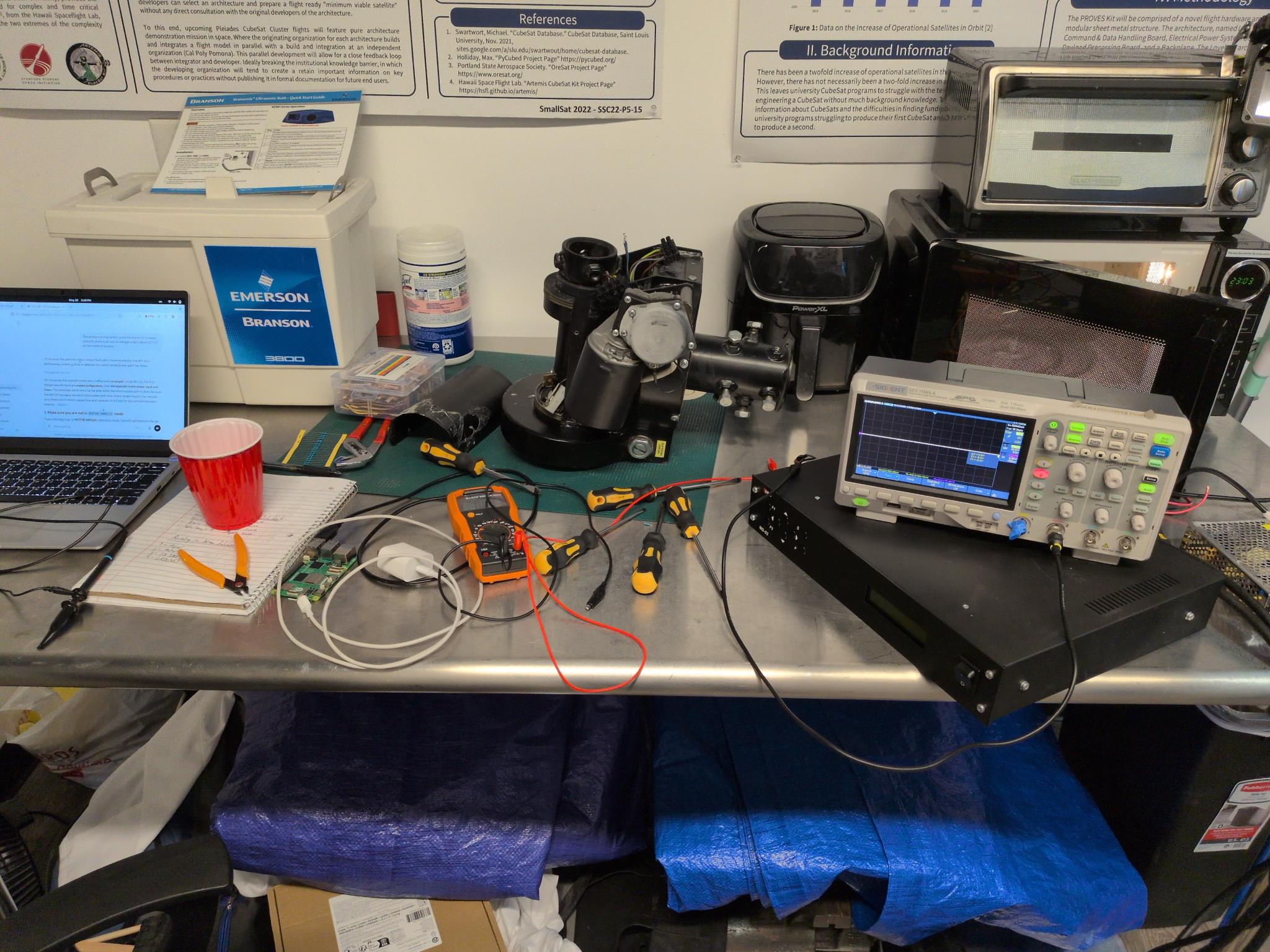
I have been working on an RF transceiver module for the Bronco Space ground station. It's for use with the PROVES CubeSat and it can do Doppler correction. It plugs into an antenna which is pointed at the satellite, and a host PC which is the other end of the half-duplex connection to the satellite.
As I drew near to finishing the module a month ago, I realized that that whole "antenna pointing" thing was going to be more of a challenge than we on the PROVES team had anticipated. While Bronco Space had had a working ground station in the past, the driver for the antenna rotator had been broken for over a year after a student had shorted it. The PROVES team had put fixing the ground station on the backburner since we had more pressing tasks, and since there was a group of students from another team, CADENCE, who were nominally responsible for getting the ground station up and running again. Hopefully, they would take care of it and we wouldn't have to worry about it.
However, what we didn't realize was that the students on CADENCE were on a totally different timetable from us. Our satellite was going into orbit in June, and CADENCE wouldn't be going into space for a while. So when I looked into the status of the ground station it was still exactly how it had started: "Everything should just work once we get a new driver for the rotator." I realized that I would probably have to make it happen myself if it was going to be ready by the time we needed it for PROVES.
The first and hopefully only step was buy that new driver. The broken driver was a SPID Rot2Prog. Unfortunately, this model was so old that we couldn't find anywhere we could buy one new!
There were more recent driver models from the same manufacturer, and after climbing the pole suspending the rotator (in a totally OSHA-approved way) to look at the model of the rotator, I concluded that the SPID MD-02 would work. Another student, Pragun, who had been a freshman when the ground station was last operational was in agreement that it would probably work, so we went ahead and bought it.
The rotator was in the mail for a long time since it had to come from Germany, and once it arrived, I was busy with finals, so all I could do was ask Pragun if he could start making the connectors.
By the time I was able to take a look at the driver, it was almost time for me to move away from Pomona. I had about two and a half days to validate the driver. Really, it should only take one day, so I wasn't worried.
On the first day, we took the driver, power supplies, etc. out to the rotator to see if the driver could turn the rotator. Another student, Karim, had made the requisite connectors already. But the rotator didn't move! We took the rotator off the mounting rod and took it into the lab for further troubleshooting. Darn.
On the second day, Karim and I troubleshooted the rotator and driver. We were sure that the rotator worked, since we saw it move when 12V DC was applied directly from the power supply. The limit switches restricting elevational motion worked. And the encoder worked as well. The trouble was the driver. We triple checked the wiring and ran through the different configuration options, but no matter what, the driver would not put out any voltage to the motor. We just saw a 400 mV, 20 ms choppy sine wave on the output.
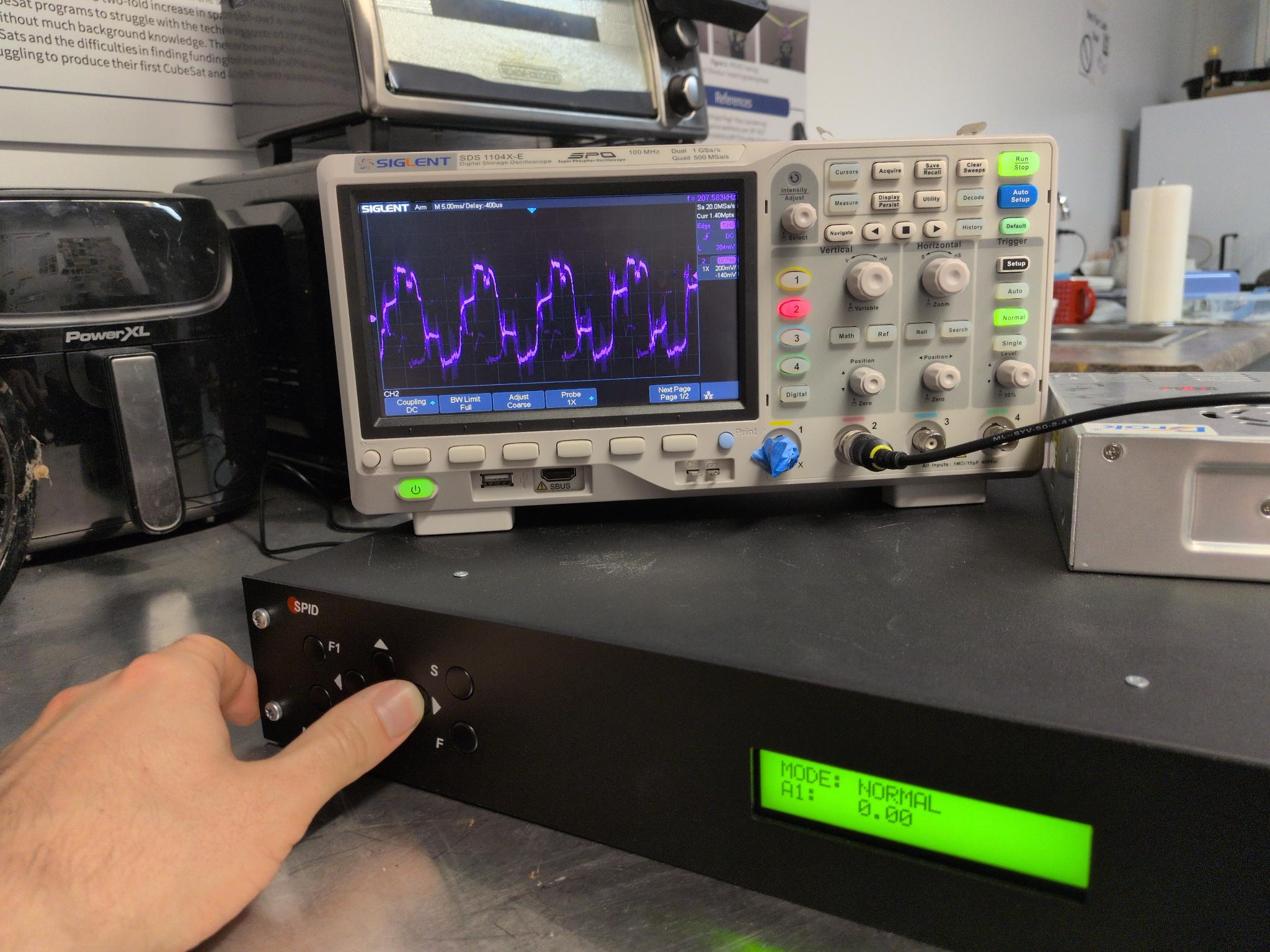
I ended the day pretty worried that we had a defective unit and decided to wake up at 5am the next day to call the German company (WiMo) to ask for troubleshooting advice or otherwise information about returning the unit.
On the third day, I got no troubleshooting help from WiMo in the morning, but they said they would accept a return. Which would royally suck, since I was really hoping to get the ground station squared away before moving. We had tried all the troubleshooting we could without taking the driver apart, and I was reluctant to try that since I didn't have enough time to see the effort through and it could also void our warranty and prevent us from getting a replacement should we have to.
So, I spend the morning of the third day writing up all we had tried. And then handed it off to Pragun and Karim for some last-ditch troubleshooting before returning it.
Happily, they were able to get it working. They took the driver apart and discovered that the power connector was wired differently than the datasheet said. After moving ground from one pin to another, the rotator was working as expected. Hurrah!
Please send comments to blogger-jack@pearson.onl.